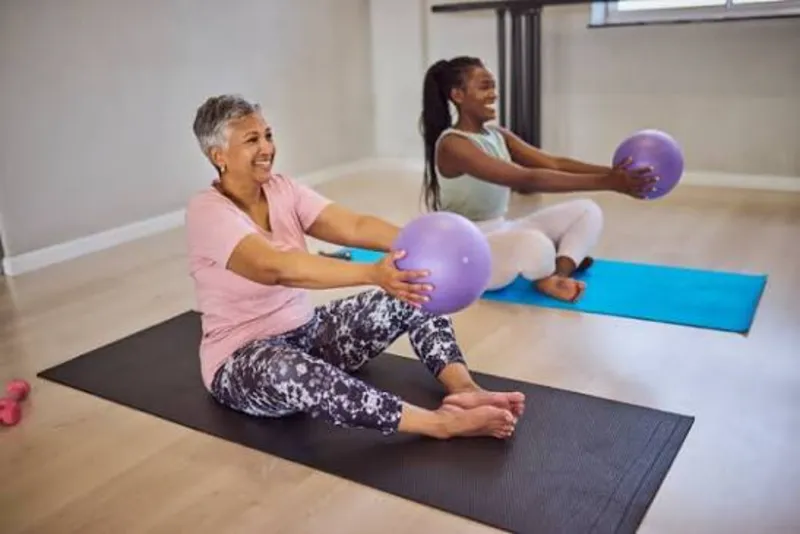
Staying active becomes more important with every passing decade, yet it is also the thing many older adults quietly stop doing. Sore knees, a fear of falling, or simply not knowing where to start can turn a daily walk into an occasional one. The good news is that you do not need a gym membership or intense workouts to stay strong. Low impact exercises for seniors protect joints while building the strength, balance, and energy that support independent living.
If you are looking for an environment that makes movement easier for a parent, you can book a tour at Seaside Hallandale Beach to see how daily activity fits into community life.
What Does “Low Impact” Really Mean?
Low impact exercise keeps at least one foot on the ground or the body supported, such as in water or on a chair. That reduces the jarring force on knees, hips, and the spine that comes from running or jumping. It does not mean easy or ineffective. Done regularly, low impact exercises for seniors raise the heart rate, work the muscles, and improve flexibility, all with a much lower risk of injury.
The Benefits of Exercise for Seniors
The benefits of exercise for seniors reach far beyond physical fitness. Regular movement supports nearly every part of daily life.
- Stronger muscles and bones: helps slow age-related muscle loss and supports bone density
- Better balance: lowers the risk of falls and the fear that comes with them
- Heart and lung health: improves circulation and stamina
- Blood sugar and weight control: supports healthy metabolism
- Brighter mood: helps reduce stress, anxiety, and low mood
- Better sleep: regular activity often leads to deeper, more restful nights
- Sharper thinking: research links physical activity to better memory and focus
- More independence: makes everyday tasks like climbing stairs or carrying groceries easier
Even modest, steady activity can bring meaningful improvements, and it is rarely too late to begin.
How Much Exercise Do Older Adults Need?
General guidelines for adults over 65 suggest about 150 minutes of moderate activity each week, plus muscle-strengthening activities on two or more days and balance exercises several times a week. That sounds like a lot, but it can be broken into short sessions, such as ten minutes after each meal.
Anyone with a health condition, recent surgery, or a long break from activity should talk to a doctor first. Every person’s starting point is different, and a doctor or physical therapist can help set a safe pace.
Walking and Water Workouts
Walking is the simplest form of exercise and remains one of the best of all low impact exercises for seniors.
- Aim for short, regular walks rather than one long outing
- Choose even surfaces and supportive, closed-back shoes
- Walk in the morning or evening in warm climates, and carry water
- Invite a friend or family member to make it social
Water exercise is another excellent option. The buoyancy of water supports body weight, which eases pressure on joints while providing gentle resistance. Water walking, gentle laps, and pool aerobics suit people with arthritis or balance concerns.
Chair Exercises for Seniors
Chair exercises for seniors are ideal for anyone with limited mobility, balance concerns, or low stamina, and they work well for beginners too. A sturdy chair without wheels provides stability while the body gets moving.
Try these simple moves:
1. Seated marching: lift one knee at a time as if marching in place, for 30 to 60 seconds
2. Arm circles: extend arms to the sides and make small circles forward, then backward
3. Seated leg extensions: straighten one leg slowly, hold for a moment, then lower
4. Shoulder rolls: lift the shoulders toward the ears, then roll them back and down
5. Ankle circles: rotate each foot in both directions to improve circulation
6. Seated torso twists: turn gently to each side, keeping the hips facing forward
Start with five to ten repetitions of each move and build up gradually.
Strength Training for Older Adults
Strength training for older adults is one of the most effective ways to protect independence, because muscle loss accelerates without regular resistance. It does not require heavy weights.
- Sit-to-stand: rise from a firm chair and sit back down slowly, using hands only if needed
- Wall push-ups: stand an arm’s length from a wall and push gently, bending the elbows
- Resistance bands: light bands offer adjustable, joint-friendly resistance for arms and legs
- Heel raises: hold a counter for support and rise onto the toes
- Light hand weights or water bottles: simple tools for bicep curls and shoulder presses
Aim for two or three sessions a week, with a rest day between them. Soreness is normal, but sharp pain is a signal to stop.
Balance and Flexibility Practices
Balance work reduces the risk of falls, and flexibility keeps movement comfortable.
●Tai chi: slow, flowing movements that research links to better balance and fewer falls
●Gentle yoga: chair or mat versions improve flexibility and calm the mind
●Single-leg stands: hold a counter and lift one foot for a few seconds
●Heel-to-toe walking: step one foot directly in front of the other along a line
●Gentle stretching: hold each stretch for 15 to 30 seconds without bouncing
Exercise Safety for Older Adults
Good exercise safety for older adults keeps workouts productive and prevents setbacks. A few habits matter most.
●Check with a doctor first, especially with heart conditions, diabetes, or joint replacements
●Warm up and cool down with five minutes of easy movement and gentle stretching
●Stay hydrated, since thirst signals weaken with age
●Wear supportive shoes with good grip, and avoid exercising in socks
●Use a sturdy chair or counter for balance moves
●Exercise in cooler hours when it is hot and humid
●Stop and seek help for chest pain, severe shortness of breath, dizziness, or sudden weakness
Listen to the body. Mild muscle soreness is normal, but sharp or lasting pain is not.
Making Exercise a Habit
Starting is easy. Staying consistent is the hard part, and even the best low impact exercises for seniors only work when they become a routine. These ideas help:
- Schedule exercise at the same time each day so it becomes routine
- Pair it with an existing habit, such as after breakfast or the morning news
- Exercise with a friend or in a group, since accountability and company make it enjoyable
- Track progress with a simple calendar and celebrate small wins
- Choose activities that are genuinely enjoyable, not just recommended
- Start small, with five or ten minutes, and increase gradually
When Staying Active Becomes Harder at Home
Many older adults want to try low impact exercises for seniors but struggle with motivation, safety concerns, or having no one to exercise with. Families sometimes notice that a parent has become less active, spends most of the day sitting, or avoids walking outside.
Signs that extra support may help include:
●A new fear of falling that keeps a parent indoors
●Declining stamina or strength over several months
●Spending most of the day alone without a reason to move
●Difficulty finding safe places or the energy to exercise
●Family members worried but unable to be present every day
In these cases, a community that builds movement and social activity into daily life can make a real difference.
How a Supportive Community Encourages Movement
At Seaside Hallandale Beach, residents live in private, well-appointed suites with a spacious open-air courtyard, scheduled group activities, and on-site staff, so staying active becomes part of the daily rhythm instead of one more thing to plan. Families can also explore the community’s specialized care options to understand the level of support available as needs change.
Exercising alongside neighbors tends to feel less like a chore and more like a social outing, which helps people stay consistent. Gentle, supervised, and social movement is often the most sustainable path to staying strong.
Frequently Asked Questions
What is the best exercise for seniors with bad knees?
Water exercise, stationary cycling, and chair workouts are gentle on the joints.
How often should older adults exercise?
Most guidance suggests moving most days, with strength work on two or more days.
Is it too late to start exercising at 80 or older?
No, many people gain strength and balance at any age.
Do I need a doctor’s approval first?
It is wise, especially with heart, joint, or balance concerns.
Moving Forward
Staying active does not require intensity, only consistency and the right kind of movement. Low impact exercises for seniors offer a safe, enjoyable way to build strength, protect balance, and keep life full of the activities that matter. Start small, listen to your body, involve a doctor, and invite someone to join you.
When you are ready to see what an active, supported lifestyle can look like, you can schedule a tour and meet the team.